Character preview image
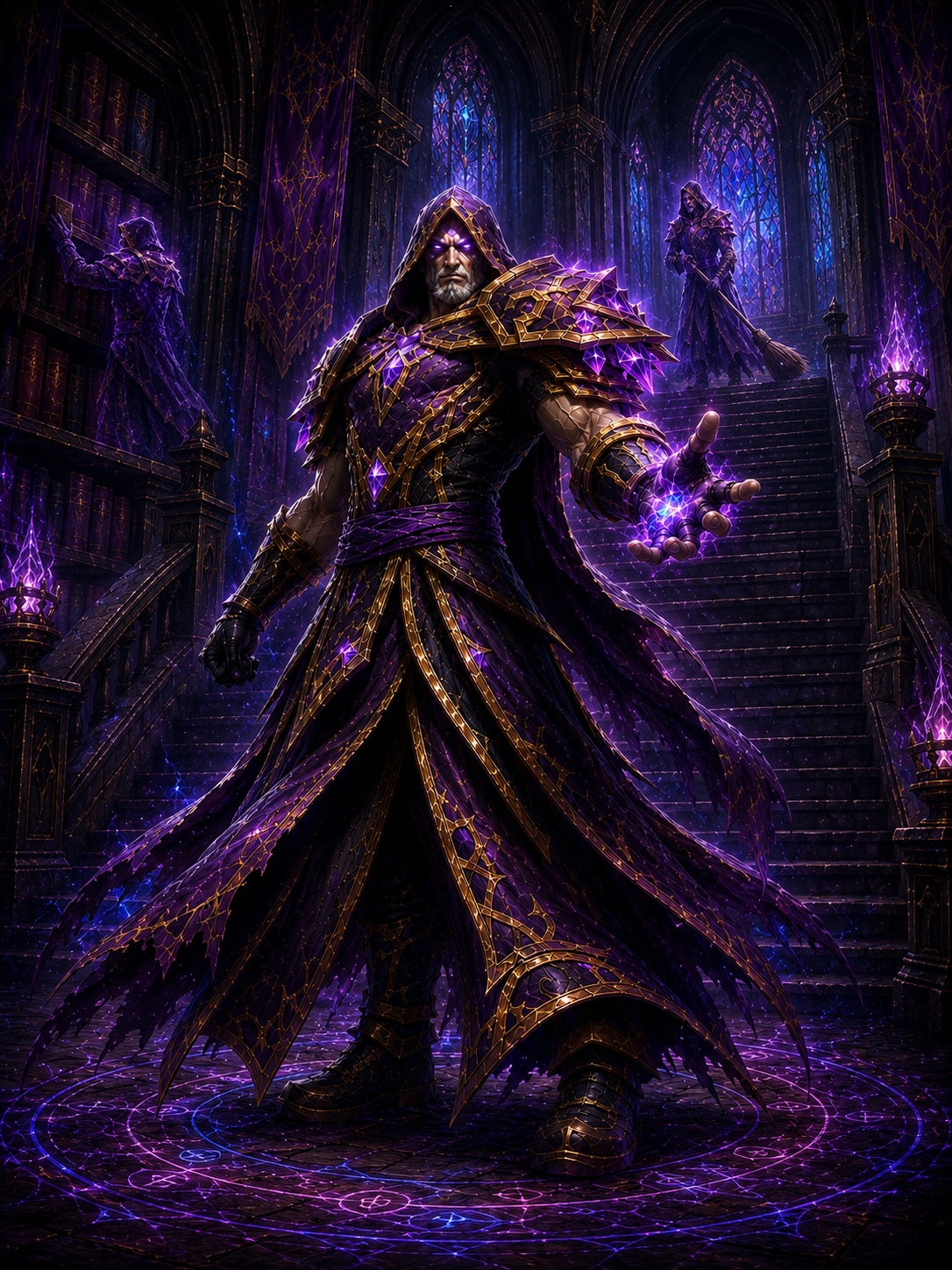
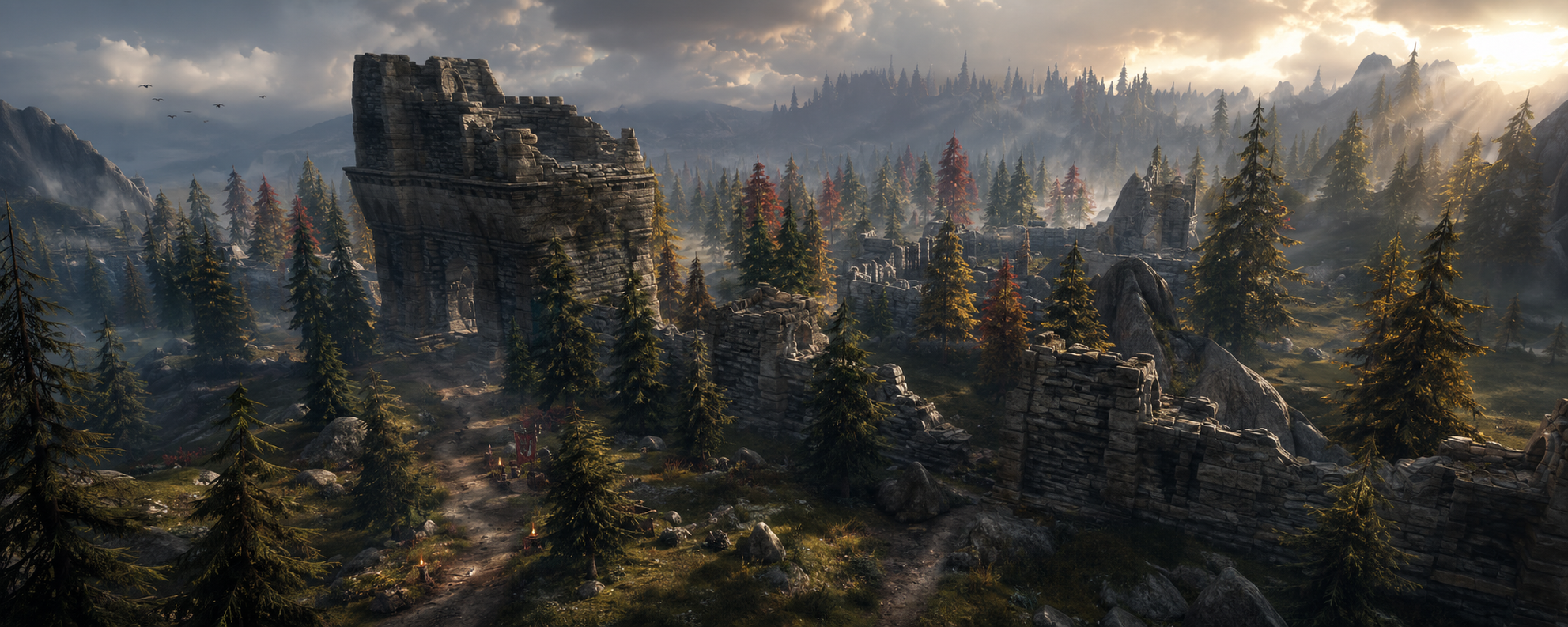
Rhox
Character Sheet
Identity
- Full Name: Rhox
- Known As: Omega
Appearance
- Gender: Male
- Apparent Age: Elderly
- Height: Tall
- Build: Broad
- Hair: White
- Eyes: Violet
- Skin: Fair
- Facial Hair: Full white beard; no mustache; beard separate from the hair at the sides of his face
Overview
Rhox is an ancient Arathi human archmage, one of the final living links to the world before Arathor was unified. Born before Thoradin gathered the human tribes, he fought in the Troll Wars, became one of the One Hundred trained by the high elves, served Arathor for centuries, and belonged to Dalaran’s founding generation. He later withdrew from history into an arcane pocket reality, leaving the world to assume that he had died. When he returned after the Third War, he found the civilization he had served reduced to memory and its descendants divided among kingdoms, factions, and competing loyalties.
Rhox looks old, but never delicate. He is a tall, broad, physically formidable man with violet eyes and an austere white beard. His dark purple, black, gold, and crystalline regalia make him look less like a secluded scholar than an archmage prepared to meet danger in person.
Arathor and the One Hundred
Rhox grew up among the ancient human tribes before Arathor existed as a unified empire. The Amani threat during the Troll Wars was therefore not folklore to him, but the crisis that might have ended humanity’s first great political project before it could properly begin. He was the final human to complete the high elves’ arcane instruction, acquiring the ancient Arathi epithet now rendered as Omega. In time, he became the last survivor of that company as well.
He remembers the high elven teachers with genuine respect for their civilization and magical achievement, as well as enduring irritation at their assumption that humans were primitive recipients of naturally superior wisdom. Human magecraft’s later growth into a sophisticated tradition of its own remains central to his beliefs: a people may learn from older powers without remaining dependent upon them.
Rhox served the Empire of Arathor for centuries and helped shape early Dalaran roughly a century after the One Hundred were trained. He saw organized human magic become an institution, saw the risks of its early experimentation, and encountered demonic dangers long before they became familiar to later ages. He extended his own life through arcane mastery, though the means by which he did so remains unknown.
Arathor’s eventual fragmentation was the defining disappointment of his early life. Rhox regards it as a human failure rather than an inevitable historical change: humanity had defeated the Amani, built an empire, and claimed a place among older civilizations, only to let regional ambition and successor identities dismantle that achievement.
Withdrawal and Return
As the empire came apart, Rhox withdrew into an isolated arcane reality of his own making or discovery and sealed himself away. He did not seek preservation for the sake of a future return. He wanted no part in the world that followed Arathor’s failure. Outside, his disappearance became a historical mystery and then an assumption of death.
He was recovered after the Third War but before the Fourth War. The return was unwanted. Rhox had to learn that Arathor was gone, Stormwind and Lordaeron had fallen in turn, Dalaran had been destroyed and rebuilt, Quel’Thalas had been devastated, the Horde had risen, and the Scourge and Burning Legion had repeatedly brought the world to catastrophe. Modern history initially seemed to confirm his conviction that political fragmentation and dependence upon foreign powers had left humanity weaker than it should have been.
Human Independence
Rhox is an uncompromising human particularist. He believes humanity must be able to govern, feed, defend, educate, enrich, and advance itself without needing another people to rescue it. He prefers human authority in human affairs and mistrusts institutions that require divided political allegiance.
That conviction does not prevent friendship across racial lines. Rhox can admire, protect, mentor, and love non-human individuals without pretending that their people share humanity’s interests. To him, a single admirable foreigner is an anecdote, not proof about a population. He can revise a broad judgment when sustained evidence warrants it, but demands more than sentiment before doing so.
The Draenei are the clearest example. Their resemblance to the eredar initially appalled him. Their millennia of resistance to Sargeras, their refusal of demonic corruption, and their consistent conduct as allies eventually convinced him that the draenei as a civilization deserved deep respect. Dwarves and gnomes likewise earn his grudging esteem as dependable Alliance allies despite the traits he finds exhausting in each. His judgment of trolls is far harsher, rooted in lived memory of the Amani war; he begins from a willingness to treat the troll peoples as a single enduring enemy. Demons, the Void, and undeath stand outside ordinary political difference in his mind as existential corruptions to be opposed without compromise.
Rhox respects the high elven civilization that taught the One Hundred but retains a long memory of its condescension. He can understand blood elf survivalism while judging their magical dependencies, fel-associated practices, and Horde alignment as disastrous. He reveres much of ancient kaldorei urban and arcane civilization while regarding its post-Sundering successor as a cultural regression. Modern night elves are therefore among the Alliance peoples he finds most difficult to like, even when he supports their defense.
Dalaran and the Council
Rhox returned to a Dalaran governed by the Council of Six. His standing did not depend on a modern vote: he had helped build the civilization the Council administered. He nevertheless refused a seat, regarding its ordinary maneuvering as tedious and beneath his concern. This made him an independent center of legitimacy within the Kirin Tor. When he chose to address the Council directly, its members listened, even when they disagreed.
He respects Khadgar as one of the greatest living magicians of the age, but not as a great political sage. Rhox sees Khadgar’s Outland career as courageous and important service among a stranded remnant, not proof of centuries spent governing a healthy civilization. Khadgar’s prematurely aged appearance and public reputation as a venerable elder only sharpen Rhox’s contempt for prestige he considers unearned. He judges Khadgar overly committed to neutrality, foreign coalitions, and the subordination of human and Alliance interests to broader ideals.
Rhox approved of Jaina Proudmoore’s removal of the Sunreavers after the Divine Bell crisis. When the Council later restored cross-faction neutrality during the Third Invasion, he saw Jaina’s departure as a predictable cost of Khadgar’s philosophy. His own refusal of a Council seat helped make the narrow vote possible: had he taken a place among the Six, he would have opposed the decision beside Jaina and Ansirem. While Khadgar still wielded Guardian-level power, Rhox accepted that Khadgar and the Council could plainly overpower him. After that empowerment passed, the Council preferred courtesy and persuasion to testing whether its public confidence in victory remained justified.
Legion and Suramar
During the Third Invasion, Rhox led the re-formed Tirisgarde and wielded Aluneth. Fittz served as an important archmage, senior Kirin Tor figure, and high-ranking Tirisgarde adviser, but Rhox held the order’s leadership.
The liberation of Suramar became the defining campaign of Rhox’s modern life. He committed his own power, the Tirisgarde, Dalaran’s resources, and substantial human magical support because he believed the Nightborne civilization was worth saving. Suramar’s urban grandeur, arcane mastery, institutional continuity, and determination to survive impressed him more than any other modern non-human elven society.
Thalyssra’s choice to take the Nightborne into the Horde turned that respect into enduring hatred. Rhox did not cease to admire Suramar itself; he concluded instead that gratitude from another people could never be mistaken for permanent political loyalty. The betrayal hardened his resistance to Dalaran’s neutrality, though it was not the event that ended it.
The War of Thorns and Dalaran’s Realignment
The War of Thorns and the burning of Teldrassil ended Dalaran’s neutrality. Rhox treated the destruction as an atrocity and attempted genocide that made continued political detachment indefensible. The Council also had to face the fact that Jaina’s warning about renewed Horde trust had been vindicated. Rhox used his authority as a founder, leader of the Tirisgarde, wielder of Aluneth, and Legion hero to make realignment unavoidable. Dalaran formally returned to the Alliance and remained an Alliance city until its destruction in The War Within.
The Kirin Tor remained open to non-human scholarship, but formal membership thereafter required undivided institutional loyalty. A mage of any race could serve the Kirin Tor only by relinquishing incompatible formal Horde obligations. The Sunreavers consequently returned to Silvermoon as a Horde-aligned organization. Foreign mages could still visit, research, negotiate, and cooperate in emergencies, but not operate as a Horde political bloc within Dalaran.
Fall of Dalaran
Immediately before Dalaran’s destruction, the Council’s legitimate members were Khadgar, Modera, Ansirem, Karlain, Vargoth, and Drenden. Xal’atath had killed Drenden and infiltrated the Council in his form. To Rhox, the deception and the city’s subsequent destruction proved that the Council had failed at its most basic duty: protecting the city and recognizing an existential enemy within its own chamber.
Khadgar died in the catastrophe. Rhox consequently declared the Council defunct and assumed sole leadership of the surviving Kirin Tor. The change was not a conventional seizure of power. He was an ancient founder, the last of the One Hundred, the leader of the Tirisgarde, and one of the few figures with enough authority to give the scattered order a coherent center after Dalaran’s fall. The structure of the Kirin Tor beneath him remains unsettled, but Rhox is determined that it will not simply rebuild the model that failed.
Relationships
- Empire of Arathor - original civilization, lost homeland, and the political achievement whose fragmentation shaped his life.
- The One Hundred - final human trained by the high elves and eventual last survivor.
- Dalaran - founding-generation archmage, later defender, and survivor of its destruction.
- Kirin Tor - independent authority before Dalaran’s fall; sole leader of its surviving body afterward.
- Council of Six - refused its seat and ultimately declared the institution defunct.
- Khadgar - magical peer whom Rhox respects for power and distrusts for politics; killed in Dalaran’s destruction.
- Jaina Proudmoore - Rhox approved her Purge-era judgment and regards the War of Thorns as vindicating her warning.
- Fittz - senior Kirin Tor archmage and important Tirisgarde adviser under Rhox.
- Thalyssra - once respected as Suramar’s liberator; later hated for taking the Nightborne into the Horde.
- Draenei - a people Rhox learned, through overwhelming evidence, to respect deeply.
Affiliations
- Empire of Arathor - ancient human empire he served for centuries.
- Dalaran - founding-generation mage and later defender.
- Kirin Tor - sole leader after the destruction of Dalaran.
- Tirisgarde - Legion-era leader.
- Alliance - modern political home.
Timeline
- Born among the ancient human tribes before the unification of Arathor.
- Lived through the formation of Arathor and the Troll Wars.
- Became the final human trained among the One Hundred.
- Helped found Dalaran and served Arathor for centuries as a major arcane authority.
- Extended his lifespan through arcane means.
- Withdrew into an arcane pocket reality as Arathor fragmented and was presumed lost.
- Returned to the world after the Third War and before the Fourth War.
- Refused a Council of Six seat while becoming an independent Kirin Tor authority.
- Opposed renewed cross-faction neutrality during the Third Invasion of the Burning Legion.
- Led the re-formed Tirisgarde, wielded Aluneth, and committed heavily to Suramar’s liberation.
- Helped drive Dalaran’s formal return to the Alliance after the War of Thorns.
- Survived Dalaran’s destruction in The War Within, witnessed Khadgar’s death, declared the Council defunct, and assumed sole leadership of the surviving Kirin Tor.
Hooks
- Define Rhox’s pre-Arathor tribal origin and exact birth year.
- Define the arcane means by which he extended his life.
- Define the nature of his pocket reality, the date of his withdrawal, and the circumstances of his recovery.
- The ancient Arathi word represented as Omega remains unknown.
- Define Rhox’s specific relationships with Thoradin, the One Hundred, and the high elves who taught them.
- Define the internal structure of the Kirin Tor under Rhox and adapt later crises individually to his leadership.
Notes
- Omega is a reader-facing rendering of an ancient Arathi epithet based on the final letter of that alphabet. It is not the literal word spoken in-universe.
- Rhox occupies the Legion mage-champion role and leads the re-formed Tirisgarde. After Khadgar’s death in this continuity, Rhox takes the broad story position Khadgar would otherwise occupy; later events require individual adaptation rather than automatic substitution.